
Indiana bans city caps on rental properties
- May 26, 2026 | Jennifer Sokolowsky
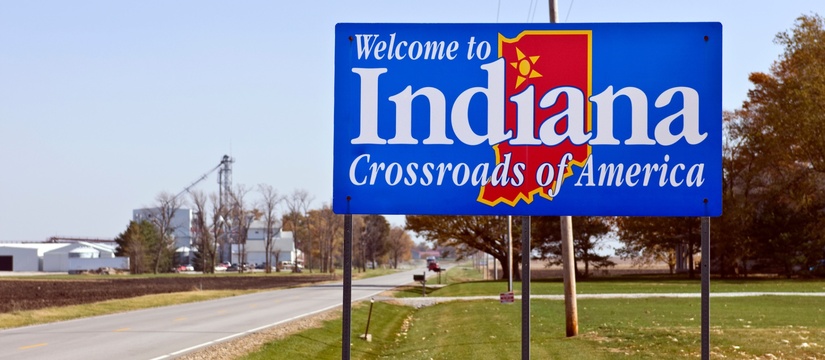
A new Indiana law prohibits local governments from capping the number of residential rental properties, part of a package of legislation aimed at improving housing supply and affordability. It goes into effect July 1, 2026.
Key takeaways
- Indiana bans local rental caps beginning July 1, 2026. HEA 1210 prevents cities and counties from limiting the number of residential rental properties, including both long-term and short-term rentals (STRs).
- Carmel’s short-term rental rules are effectively invalidated. The law retroactively changes how Indiana defines short-term rentals, eliminating Carmel’s ability to regulate STRs as bed-and-breakfast properties under its 2017 ordinance.
- Local governments and HOAs still retain some authority. Cities can continue enforcing safety standards, inspections, registration requirements, and occupancy limits, while HOAs can still restrict rentals — but only primary-residence owners can vote on those restrictions.
The law, House Enrolled Act 1210, applies to both long-term rentals and STRs, with an exception for cities that adopted STR ordinances before January 1, 2018. The law defines STRs as the rental of a:
- House
- Apartment
- Condo
- Time share
- Guest house
- Detached living space
- Other dwelling unit designated for single-family residential use
for fewer than 30 days through a STR rental platform such as Airbnb or Vrbo. Under the law, STRs don’t include private, owner-occupied businesses with two to 10 guest rooms where overnight accommodations and a morning meal are provided to the public for compensation.
The state law targets ordinances in the cities of Fishers and Carmel. Both have passed laws limiting rentals to 10% of homes within a subdivision in response to concerns about local homeownership vs. investor-owned properties. Ordinances adopted before January 1, 2026 — which applies to the Fishers and Carmel laws — have until January 1, 2028, to comply with the state changes.
Under the new regulations, cities can still require rental registration, inspections, and safety standards, including building and fire codes and occupancy limits, as long as the rules don’t create de facto rental caps.
Latest law invalidates Carmel’s short-term rental regulations
While the Fishers and Carmel rental cap ordinances exclude STRs from their caps, the new state law will affect STR regulations in Carmel.
The state passed a law in 2018 that generally banned municipalities from prohibiting STRs. Local governments are allowed to require a special exception, special use, or zoning variance for STRs that are not the primary residences of their owners. However, local governments may not ban STRs and may regulate STRs only for specific purposes, which include protection of public health and safety, nuisance issues, and protection of welfare, among others.
Enforcement of STR laws must be the same as enforcement for non-STR properties. The state law also dictates that local governments may charge no more than $150 for STR permits. Homeowners associations (HOAs) have more latitude to restrict STRs.
The 2018 law included a clause excluding local government ordinances passed before January 1, 2018. Carmel used this clause to regulate STRs as a form of bed-and-breakfast through its 2017 Unified Development Ordinance.
However, HEA 1210 effectively eliminates Carmel’s STR restrictions by retroactively excluding local B&B definitions from applying to STRs. This rendered Carmel’s STR regulations moot and prompted the city to drop an ongoing lawsuit against an STR operator in April 2026.
“The Indiana legislature retroactively amended (the 2018 law) so ‘Bed and Breakfasts,’ as defined under Carmel’s Unified Development Ordinance, are explicitly excluded from the statutory definition of short-term rentals, effectively rendering moot the enforcement action,” City of Carmel Corporation Counsel Samantha Karn said. Carmel officials will most likely revise their STR rules to align with the new state requirements.
Absent owners get less say in HOA rental rules
HEA 1210 allows HOAs to continue to restrict rentals, but it changes who can vote on those restrictions. After July 1, only HOA members who have a homestead property — meaning it’s their primary residence — can vote on restrictions to rental properties. Owners who don’t live in their properties aren’t allowed to vote on these issues. In addition, only homestead owners can be members of HOA boards, except for developers who own lots within the HOA boundaries.
Compliance with Indiana lodging tax rules
In addition to local operational regulations, Indianapolis STR hosts are required to follow lodging tax regulations. STR operators must register with the Indiana Department of Revenue and register to receive a Retail Merchant Certificate. Operators are required to collect state sales tax and local county innkeeper’s tax from guests and file tax returns with the state.
In Indiana, all charges that are essential to the furnishing of accommodations and included in the room charge are taxable. This includes charges such as cleaning fees, pet fees, rollaway bed fees, extra person fees, no-show fees, etc. However, forfeited damage deposits, damage fees, cancellation fees, and extra services such as laundry or dry cleaning are not subject to lodging taxes.
In Indiana, STR marketplaces such as Airbnb and Vrbo are required to collect Indiana short-term rental taxes for hosts when the listing is booked. If taxes aren’t being collected, the host is responsible for collecting and remitting them to tax authorities.
Get help with Indiana lodging taxes
Avalara automation helps simplify tax and compliance for STR operators. With Avalara MyLodgeTax, STR owners and property managers can register with tax authorities, calculate lodging taxes, prepare and file returns, and remit payment. Avalara is trusted by 200,000+ direct and indirect customers in 75+ countries. For more on lodging taxes in Indiana, see our state vacation rental tax guide. If you have tax questions related to vacation rental properties, drop us a line and we’ll get back to you with answers.
FAQ
Does Indiana HEA 1210 apply to short-term rentals?
Yes. The law applies to both long-term rentals and STRs rented for fewer than 30 days through platforms such as Airbnb and Vrbo. STRs regulated by local ordinances adopted before January 1, 2018, may be exempt.
Can Indiana cities still regulate rental properties?
Yes. Cities may still enforce health and safety rules, building and fire codes, occupancy limits, inspections, and registration requirements, provided those rules do not function as rental caps or bans.
Are homeowner associations still allowed to restrict rentals?
Yes. HOAs can still restrict rentals, but after July 1, 2026, only owners who use their property as a primary residence may vote on rental restrictions or serve on HOA boards.
Do Indiana short-term rental hosts still need to collect lodging taxes?
Yes. Indiana STR operators must comply with state sales tax and local innkeeper’s tax requirements.