


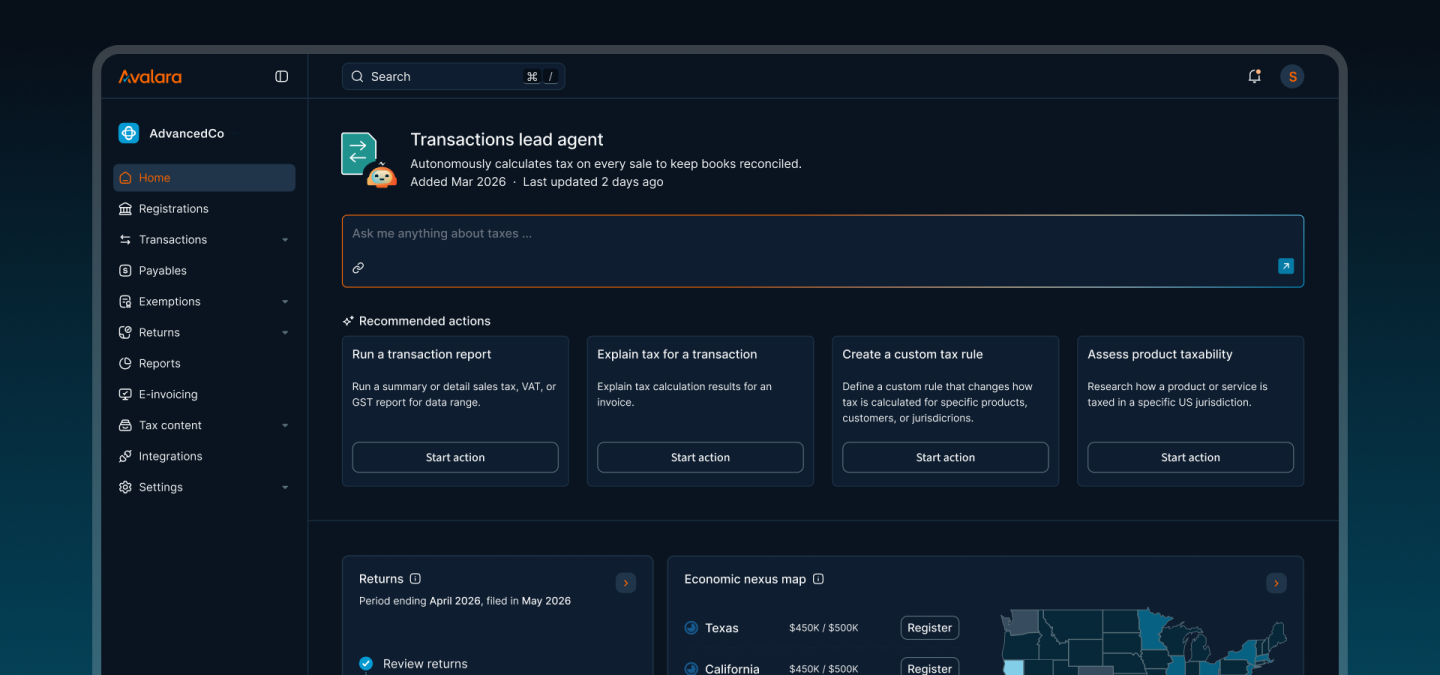


Avalara powers millions of businesses worldwide

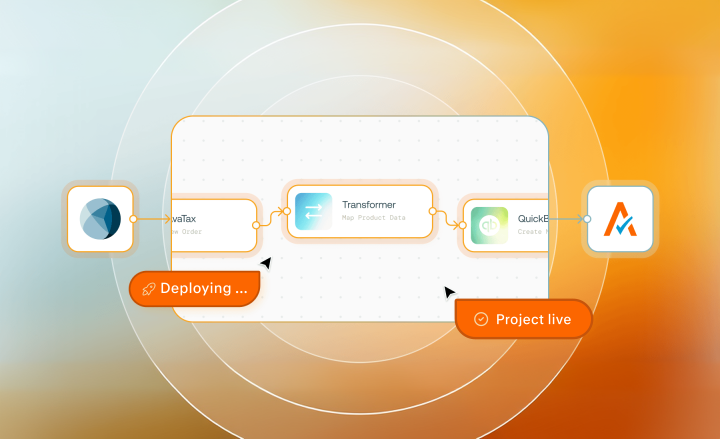


- Connect to any sales or purchasing system
- Ingest transactions your way — in real time or batch
- Standardize and enrich data with AI-powered mapping
- Use Versori by Avalara to build and deploy your custom AvaTax integration in days, not months
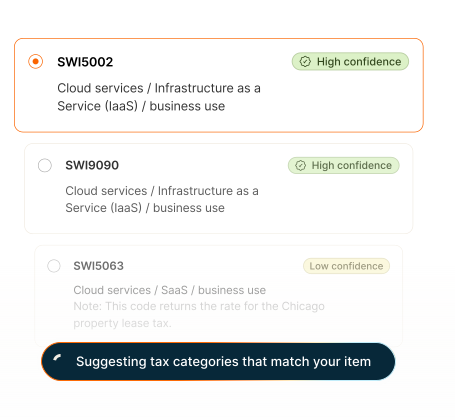
- AI-powered item classification for accurate tax configurations
- Precise jurisdiction matching with up-to-date tax content
- Natural-language custom tax rules with simulation against real transactions before publishing
- Configurable specialized taxes and fees (e.g., bag fees, environmental fees, delivery surcharges, etc.) without custom code
- Real-time exemption certificate validation
- Return accurate tax to every transaction
- Keep systems in sync
- Reduce reconciliation headaches
- Get always-on multicloud reliability with 99.99% uptime, even at peak volume
- AI-powered dashboards with dynamic data visualization
- Conversational AI for reporting and risk insight
- Continuous economic nexus tracking with proactive alerts and guided state registration
- Autonomous compliance anomaly detection for transactions and exemptions, surfacing root causes and suggested resolution workflows before audits
- Integrated tax research and citation-backed guidance
CUSTOMERS


TAX TYPES

Avalara maintains predefined tax codes that track taxability for categories of software and related services regardless of the delivery methods in all U.S. states. AI-powered Item Classification uses product images to suggest the right tax code.
AvaTax provides centralized administration to implement tax policies throughout the business to more accurately calculate sales and use tax across all channels.
AvaTax uses proprietary geospatial technology to validate addresses and match them to a nationwide database of tax regions.
AvaTax allows the addition of custom tax rules to determine how items with custom tax codes are taxed and to override tax rules for predefined Avalara tax codes.
AvaTax lets businesses create, modify, and apply business- and taxability-specific rules, which are executed before tax calculation occurs.
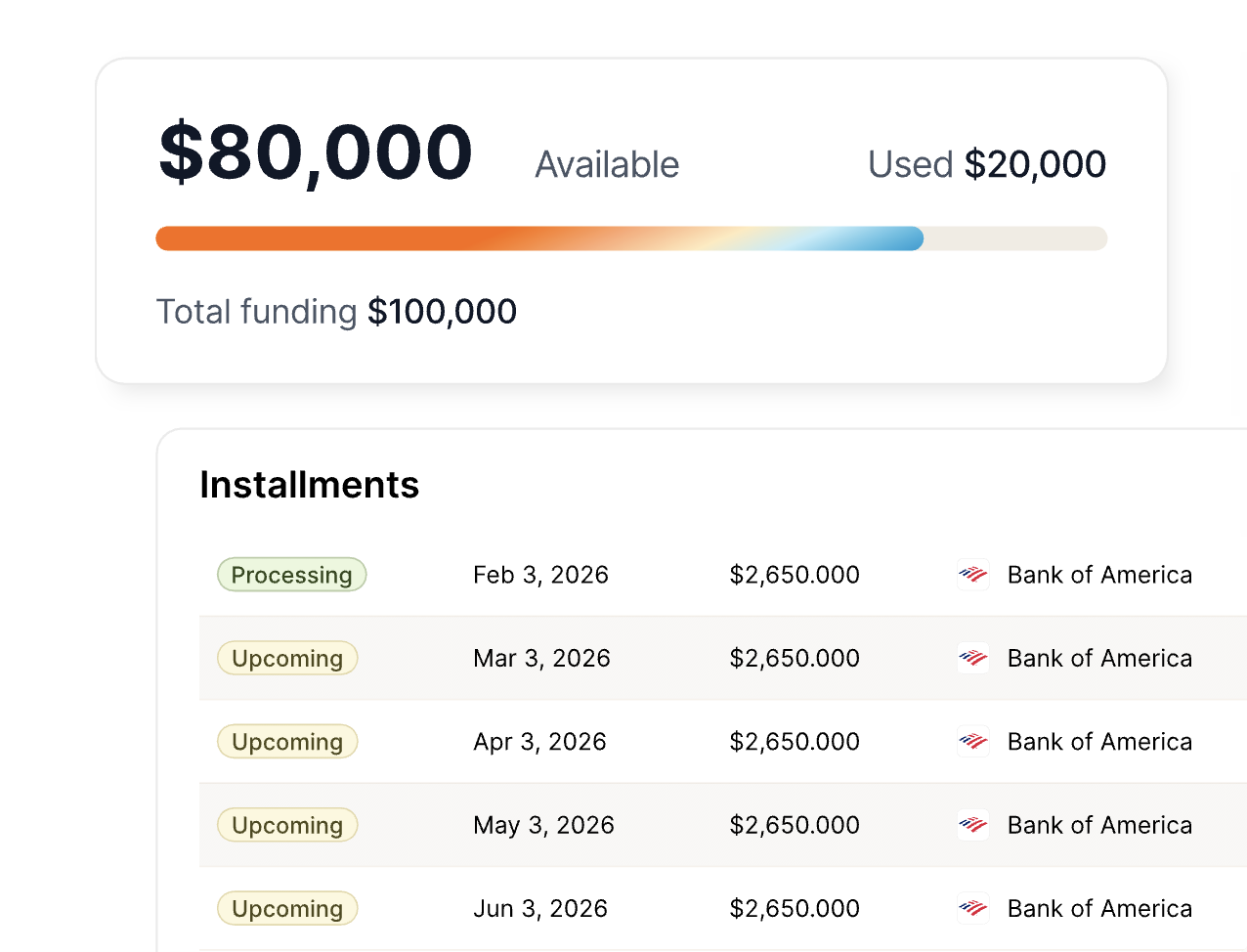
All configurations will be centralized within the accounts payable solution in AvaTax and will apply to both real-time and batch transactions with a hybrid design.
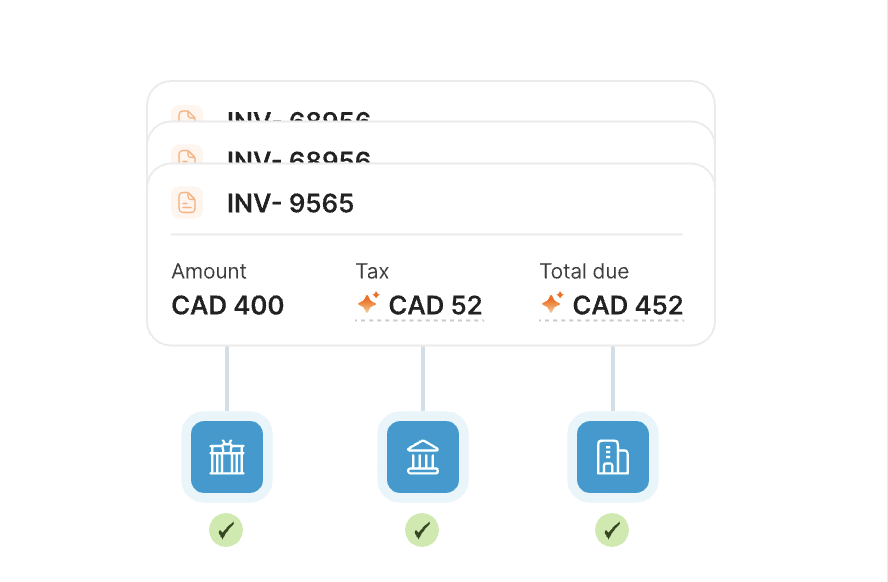
All AP transactions, regardless of source and processing status, will appear in an enhanced transaction list within AvaTax. AvaTax also enables the review of variances for over- and undercharged transactions, and acts on one, several, or many transactions.
Sales tax treatment based on sourcing rules varies across states. AvaTax accounts for state-by-state variation by automatically applying sourcing rules based on the address of the seller and the ship-to location supplied by the buyer.
Avalara maintains predefined jurisdictions (domestic U.S. states, local jurisdictions, and non-U.S. countries) that allow an end user to easily modify their tax profile as their business grows and expands.
The Avalara report library provides AI-driven reporting and natural-language search to generate insights, dashboards, and audit-ready trails in seconds.
The AvaTax REST API exposes the most commonly used capabilities for interacting with AvaTax, allowing calculation of tax, modification of documents, and validation of addresses.
Avalara Tax Research delivers authoritative, citation-backed tax content directly within the AvaTax portal. Access jurisdiction-specific rules, interpretations, and exemptions in context.
25 states can cover AvaTax calculation and filing costs for qualified sellers, with built-in audit liaison support.




Most businesses using a prebuilt connector (Shopify, NetSuite, QuickBooks, Dynamics 365, and others) can complete self-serve setup and begin processing live transactions within days. The median for self-serve customers is 26 days including external registration processes. For enterprise ERP environments like SAP or Oracle, Avalara offers managed implementation with a typical timeline of 4–6 months depending on scope. Every customer gets access to a sandbox environment for testing before going live, plus Avi, our AI implementation assistant, to actively guide configuration.
AvaTax pricing is based on the number of tax-calculation transactions your business processes annually. One transaction equals one API call — and a single invoice counts as one transaction regardless of how many line items it contains (1 line or 200 lines = 1 transaction). Plans are structured in annual tiers, with usage-based pricing that scales as your business grows. There are no per-jurisdiction surcharges or hidden platform fees.
AvaTax has more than 1,400 signed partner integrations, including prebuilt connectors for Shopify, NetSuite, QuickBooks, Sage, Microsoft Dynamics 365, SAP, Adobe Commerce, BigCommerce, WooCommerce, Salesforce, Oracle and many more. In addition, our REST API enables a custom integration, and with Avalara MCP servers, AI agents can discover and call Avalara APIs to configure integrations using natural language. You don’t need to buy a separate connector; AvaTax supports both prebuilt connectors and direct API integration.
AvaTax uses the best proprietary geospatial technology, not ZIP codes, to match each transaction to the precise tax jurisdiction at rooftop-level accuracy. This matters because tax boundaries often don’t align with postal codes: A single ZIP code can span multiple cities, counties, and special taxing districts with different rates. AvaTax validates the address, assigns the correct jurisdiction, and applies the right rate for every tax type, including overlapping state, county, city, and district-level taxes. This covers more than 900,000 tax rules across 12,000+ U.S. sales and use tax jurisdictions and 190+ countries.
Noncompliance carries real financial risk. In the U.S., interest and penalties on uncollected sales tax can exceed 30% of the tax due, and you’ll be liable for paying past-due taxes out of your own pocket. States can also impose criminal penalties and damage your business’s reputation during audits. AvaTax mitigates this risk by calculating the correct tax in real time, maintaining a complete audit trail of every transaction, and keeping rates and rules current without manual intervention. Businesses using AvaTax as well as Managed Returns and Exemption Certificate Management have improved audit preparation efficiency by up to 85%, reducing time spent per audit by up to 34 hours.
Yes. AvaTax supports multicompany, multientity, and parent/child corporate structures within a single account. Each entity can maintain separate tax profiles, nexus settings, exemption rules, and filing configurations — while your tax team retains centralized visibility and control across all of them. This is particularly valuable for businesses managing acquisitions, separate EINs, or operations across multiple ERP instances that need to roll up into consolidated returns.
Avalara supports migrations from other tax engines — including TaxJar, Vertex, Thomson Reuters ONESOURCE, Anrok, and native ERP tax modules. Our implementation team handles tax code mapping, nexus configuration, and data validation to ensure continuity. If you’re currently using batch CSV uploads with another provider, AvaTax uses AI data mapping for your sales and purchases to easily map your transactions to required fields, and our AI assistant Avi can guide you through the process. Your historical transaction data remains accessible during the transition, and sandbox testing ensures accuracy before you go live.
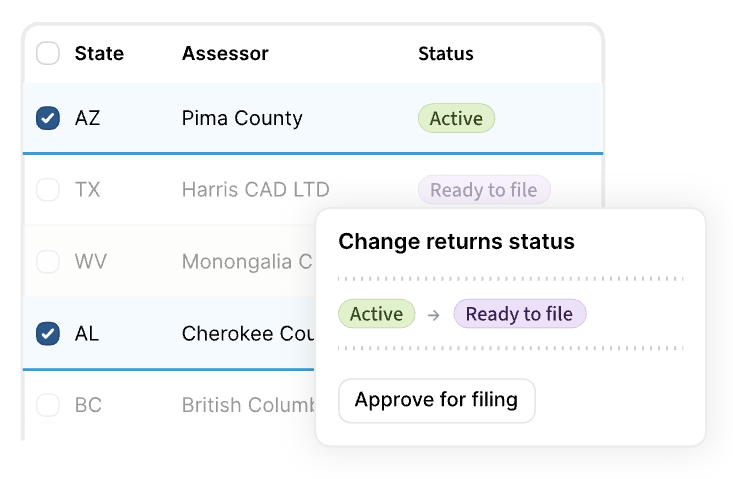
Yes. Avalara Returns integrates directly with AvaTax to automate the preparation, filing, and remittance of sales and use tax returns across multiple jurisdictions. Avalara processed and filed more than 6.6 million returns in 2025. You can also use Avalara Managed Returns, where Avalara handles filing and remittance on your behalf — reconciling a single worksheet and paying one consolidated amount. Avalara Returns can be added to your AvaTax subscription at any time without requiring a new integration; they share the same platform and transaction data.
AvaTax runs active-active across AWS, Azure, GCP, and OCI — meaning if one cloud provider region fails, tax calculations continue without interruption. This multicloud architecture delivers sub-second response times and high availability, even during peak transaction volumes like Black Friday or fiscal year-end. Avalara processes more than 54 billion API calls annually for more than 200,000 direct and indirect customers, and governments rely on Avalara data to publish official tax rates.
Yes. Avalara MCP (Model Context Protocol) servers enable AI agents to discover and call AvaTax APIs using natural language, accessing tax determinations, mapping product tax codes, and executing compliance tasks with less manual intervention. This means your existing AI workflows (across ERPs, marketplaces, and partner ecosystems) can embed tax compliance as a native capability rather than a separate process.
