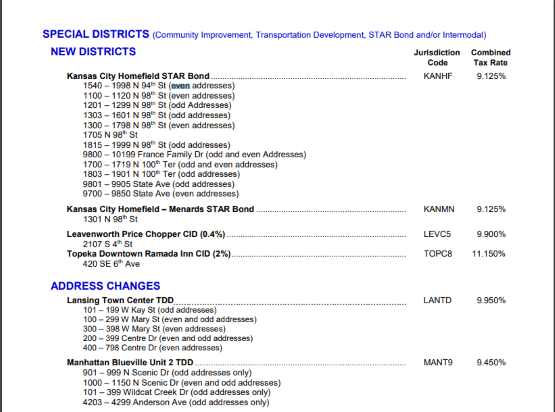
Counties and municipalities in Alabama are required to notify the Alabama Department of Revenue in writing at least 60 days prior to the effective date of a new tax or an amendment. However, the department sometimes doesn’t receive or post rate change notices until a few days before a change takes effect — or even weeks or months after a change took place.
The notices often pertain to new tax levies or changing rates, but sometimes they announce a reporting code change, and sometimes an administrative change. Like Colorado, Louisiana, and several other states, Alabama is a home rule state, meaning local governments have the authority to administer and collect their local sales taxes. Some do, while others have the Alabama Department of Revenue administer and collect local taxes on their behalf.
Periodically, a local tax authority will discontinue the services rendered by the Alabama Department of Revenue, opting to administer local sales tax itself. And periodically the inverse is true, and a local government will ask the state tax authority to administer and collect sales tax on their behalf.
For ecommerce businesses with an obligation to collect and remit sales tax in Alabama, it’s a lot to keep track of. They need to update point-of-sale systems to reflect all rate changes, and they may need to report and remit some local sales taxes to local tax authorities while filing others with the Alabama Department of Revenue. And that’s just one state.
Sales tax holidays and product taxability changes
Rates for specific products are also subject to change in all states. Recently, several states imposed new taxes on soda and other sweetened beverages; others carved out new exemptions for diapers and/or feminine hygiene products.
Thousands of normally taxable products are temporarily exempt during state sales tax holidays. For example, Alabama’s sales tax holiday for severe weather preparedness and Maryland’s energy efficient appliances sales tax holiday affected almost 7,000 different products in February 2021, and that’s just two tax-free periods. Approximately 17 states have one or more sales tax holiday(s) each year, and in 2019, there were more than 115,000 U.S. sales tax holiday rule updates.
Because of sales tax holidays, rate and product taxability changes, boundary changes, and other factors, businesses aren’t able to simply set sales tax rates in their point-of-sale systems and forget about them. They need to constantly be on the lookout for changes that will affect their compliance and adjust point-of-sale systems and sales tax collection and reporting as needed. Applying an incorrect rate or code to a transaction can lead to shopping cart or system errors.
Automating sales tax compliance is the better option. Avalara AvaTax is a cloud-based sales and use tax calculation solution that relies on geolocation technology to pinpoint exact locations. It takes special rates and circumstances into account, such as product-specific rates and sales tax holidays, and it monitors business activities, alerting you when you’re at risk of establishing nexus in a new jurisdiction.
Learn more about geolocation technology and how Avalara helps ecommerce sellers optimize tax compliance.