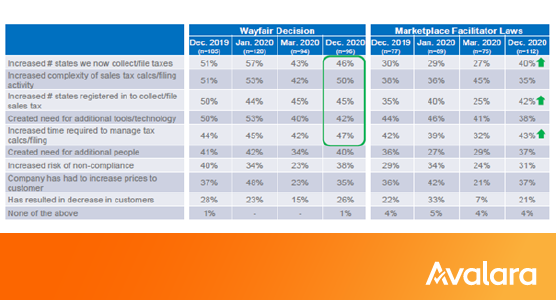
Overall, businesses are more aware of Wayfair and more affected by remote sales tax and marketplace collection requirements than previously.
This should come as no surprise. The sudden and extreme onset of COVID-19 forced businesses to move many activities online and accelerated the global shift toward ecommerce: The U.S. experienced 10 years’ worth of ecommerce adoption in just three months.
There were growing pains. Businesses of all types faced surprising supply chain issues due to shifting consumer habits, like the reduced demand for commercial (aka, large) toilet paper rolls and increased demand for home-use (aka, small) toilet paper rolls. Shelves, both virtual and in brick-and-mortar stores, emptied with alarming speed.
Main Street stores long reliant on foot traffic quickly built online stores. And many direct-to-consumer retailers found it necessary to expand into marketplaces: From July 2019 to July 2020, the number of businesses selling through Walmart’s marketplace more than doubled.
Marketplaces appeal to consumers because they offer one-stop shopping, numerous brands, and product reviews. For retailers, they can help raise brand awareness and grow sales. Marketplaces can also take over many tasks that may otherwise be overwhelming for retailers, such as order fulfillment, returns processing, even tax collection.
The pandemic has accelerated ecommerce and marketplace adoption. This, in turn, is creating new opportunities for businesses, allowing many to survive and even thrive. Yet it also exposes them to heightened tax risk because of economic nexus and marketplace facilitator laws. Read on to learn more.