Blog
Oct 29, 2026

Should you use a line of credit for equipment financing?

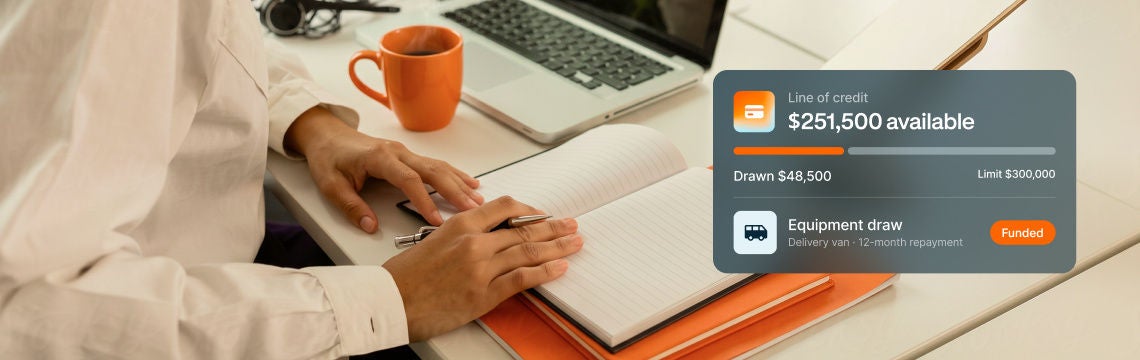
Person working at a desk with a laptop, notebook, and orange mug beside a line-of-credit and equipment-draw graphic.

Key takeaways

  • Equipment financing covers any borrowing used to acquire business equipment, including computers, warehouse scanners, packaging lines, and production tools.

  • Before taking on debt, confirm the purchase solves a real problem: restoring essential operations, ending disruptive repairs, or removing an actual bottleneck.

  • The full cost of equipment includes more than the purchase price. Delivery, installation, training, upkeep, and the productivity dip during transition all affect the real return.

  • Loan repayment should be stress-tested against cash flow timing, not just how quickly the equipment is expected to pay for itself.

  • A line of credit, such as Avalara Capital, can be a strong fit for smaller, unsecured, or staged equipment purchases a business can repay from operating cash flow.

Equipment financing, broadly defined, is borrowing to acquire the tools a business needs to operate and grow, whether it’s a replacement laptop or an entire production line. This article focuses on smaller to midsize equipment, such as computers, warehouse scanners and label printers, packaging equipment, and other production or service tools — not large capital assets like tractors or cranes, which call for different financing structures.


Whether a business is comparing equipment loans, a line of credit, or equipment financing for startups still building a credit history, the central question stays the same: Does this purchase solve a business problem worth borrowing to fix?

Should you repair, replace, or add equipment?

Equipment decisions generally fall into three categories, each with a different case for borrowing.


The first is restoring essential operations. If equipment has failed outright and the business cannot function without it, financing is usually straightforward. The second is replacing equipment that repeatedly disrupts work. Repair can postpone a purchase, but recurring repairs, downtime, and work-arounds can make keeping older equipment more expensive over time than its purchase savings suggest.


The third category, adding capacity for growth, deserves the most scrutiny. Additional equipment only creates value if it addresses the actual bottleneck. A faster packing machine will not increase shipments if staffing or order volume is the real constraint, so confirm the bottleneck is mechanical before financing new capacity.

What would the equipment actually change financially?

The next question is what the equipment changes financially. Equipment generally adds value by lowering operating expenses, reducing errors or interruptions, or enabling additional profitable work. It helps to separate productivity gains, such as a team working more efficiently, from direct cash savings, such as spending less on head count, materials, or repairs.


A useful caution: The ability to produce more is not evidence that customers will buy more. A professional services firm that upgrades its scheduling software might free up staff hours, but that only becomes revenue if demand exists to fill them. The same logic applies to a restaurant weighing a restaurant equipment loan for a new oven, or a landscaping business considering a landscaping equipment loan for an additional mower.

What does it cost to put the equipment to work?

The purchase price is only the starting point. Initial costs often include delivery, installation, accessories, software compatibility, and staff training. Upkeep costs, including maintenance, consumables, and subscriptions, can shift the math considerably. A cheaper machine may cost more to operate or become harder to service over time, erasing any up-front savings.


Transition costs are easy to overlook. Productivity often dips while old equipment is removed and staff are trained, and early mistakes add further cost. Removing old equipment may carry its own expense for hauling, disposal, or recycling, and some purchases call for a beta test before full rollout.

Can cash flow support repayment before the upgrade pays for itself?

Three factors need to be considered together: how long the equipment will last and generate value, how quickly the investment is likely to pay for itself, and when loan repayment actually begins. For more on weighing loan terms against cash flow, see How to evaluate business loan payback periods..


The key question is whether the business can generate enough cash before each payment to cover both the new financing and its existing obligations. An upgrade that pays for itself in 18 months is still a poor fit if the first payment is due before the equipment is even installed. Mapping repayment dates against expected cash flow, not just comparing total costs, separates financing that supports growth from financing that strains it.

When is a line of credit the right tool for an equipment purchase?

Some equipment financing options function like a collateralized loan, where the equipment secures the debt and reduces risk for the lender. That can work for a single, large purchase, but it ties financing to one asset and can slow approval, a frustration explored in Why is it so hard to qualify for a business loan?


A line of credit, like Avalara Capital, works differently. It is unsecured, so funds can be used for whatever the business needs, though that flexibility can carry a different rate structure than a secured equipment loan. This makes a line of credit a strong fit for smaller replacements, staged upgrades, or several purchases made over time, as long as the business can manage repayment from operating cash flow. Manufacturers weighing financing for equipment and tax obligations alike may find it useful to compare lending options for manufacturing companies first.

How can Avalara Capital support smaller equipment upgrades?

Avalara Capital is a revolving line of credit built to help businesses manage compliance costs and growth investments, including smaller equipment upgrades, without disrupting cash flow.


It can help a business prepare for replacement needs before they become urgent, so funding is in place when equipment eventually wears out. When vital equipment breaks down without warning, approval decisions move in days, not weeks, with no hard credit check required. Businesses can also fund upgrades in stages, drawing only what is needed for each purchase instead of borrowing a lump sum against future plans. Every draw includes a five-week grace period before repayment begins, giving the business time to install, test, and start using new equipment first.

Get started with Avalara Capital

Replacing or adding equipment should not mean draining the cash a business needs for payroll, taxes, and other operating costs. Avalara Capital gives eligible businesses a flexible line of credit that can be drawn as needed, with transparent pricing and no cost for credit that sits unused.


Apply for Avalara Capital to see how much credit your business may qualify for.

FAQ

Many lenders finance used or refurbished equipment, though terms can be stricter since resale value and remaining useful life are harder to assess. An unsecured line of credit avoids this, since funds are not tied to the equipment purchased.

Yes. Businesses often finance part of the cost and pay the rest in cash. A line of credit suits this well, since it can be drawn in smaller amounts rather than requiring a loan for the full price.

It depends on the lender. Some equipment loans require a minimum purchase amount to justify underwriting, while a line of credit like Avalara Capital has no mandatory minimum draw.

No. Collateralized loans use the equipment to secure the debt, but unsecured options, including a business line of credit, do not tie repayment to any single asset. That trade-off can affect pricing, so weigh it against how the equipment will be used.

About the author

Bret Lawrence, Head of Content for Embedded Finance and Avalara Tax Desk contributor, writes about working capital and the challenges tax debt can pose to accounting and business professionals.

Sales tax rates, rules, and regulations change frequently. Although we hope you'll find this information helpful, this blog is for informational purposes only and does not provide legal or tax advice.

Ready to get started?

Start with a demo, a free nexus assessment, or a conversation with our team — and discover why millions of users trust Avalara.