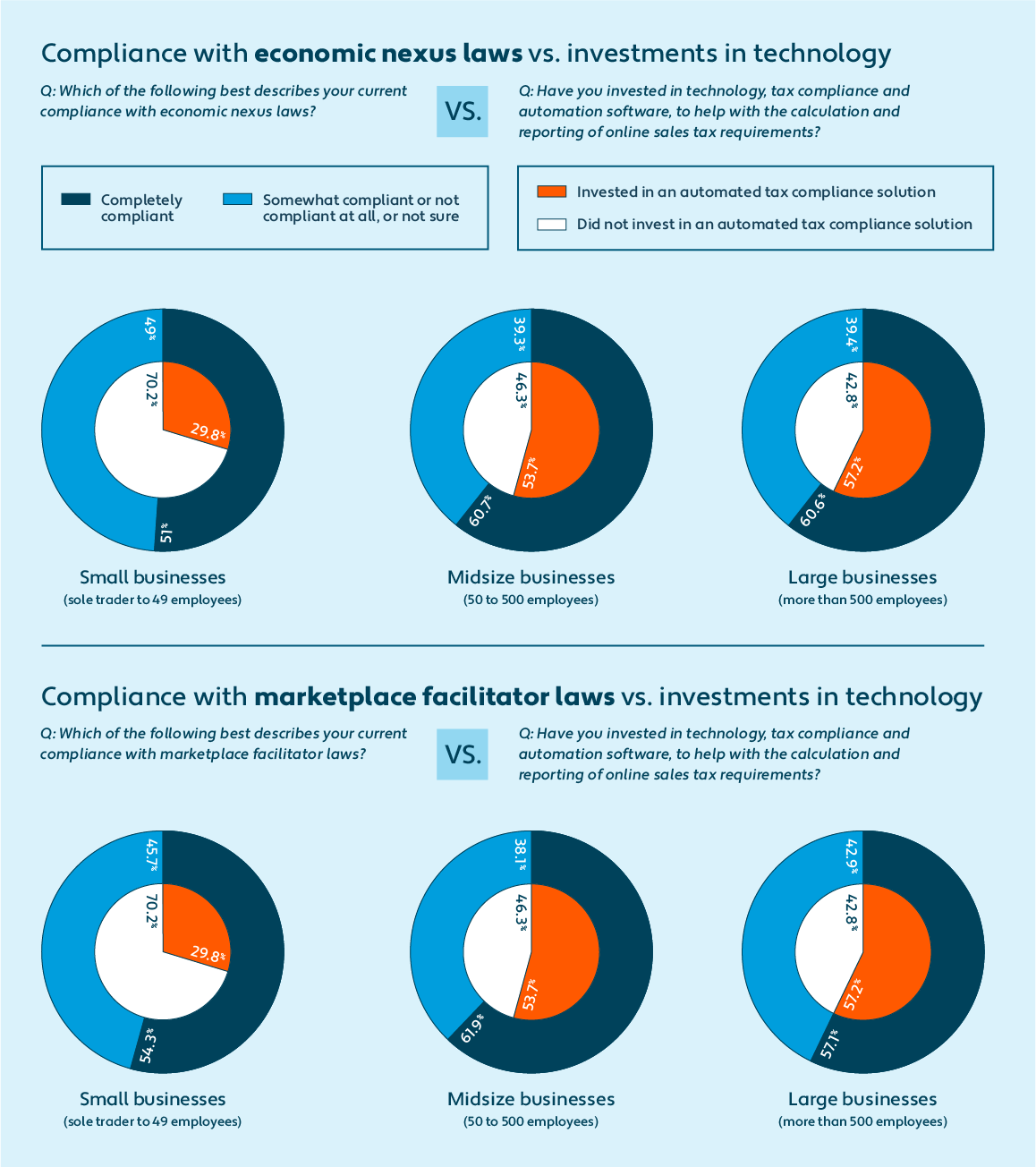
Economic nexus is an economic connection between a business and a state that allows the state to tax a business with no physical tie to the state.
Every state with a general sales tax enacted an economic nexus law in the wake of the Wayfair case. Specific requirements vary from state to state, but all economic nexus laws provide an exception for businesses with sales into the state under a certain threshold, such as $100,000 in sales or 200 separate transactions in the state in the current or previous calendar year.
Economic nexus thresholds are subject to change, like all sales tax laws. For example, South Dakota and Louisiana are eliminating their transaction threshold in favor of a sales-only threshold in 2023, as several other states have already done. State-specific threshold information is available in our state-by-state guide to economic nexus laws.
Once a remote seller establishes economic nexus with a state, that seller must register then collect and remit sales tax on all taxable sales in that state. Some states require businesses to register as soon as they cross the economic nexus threshold, as in before the next transaction. Other states give businesses more time to prepare.
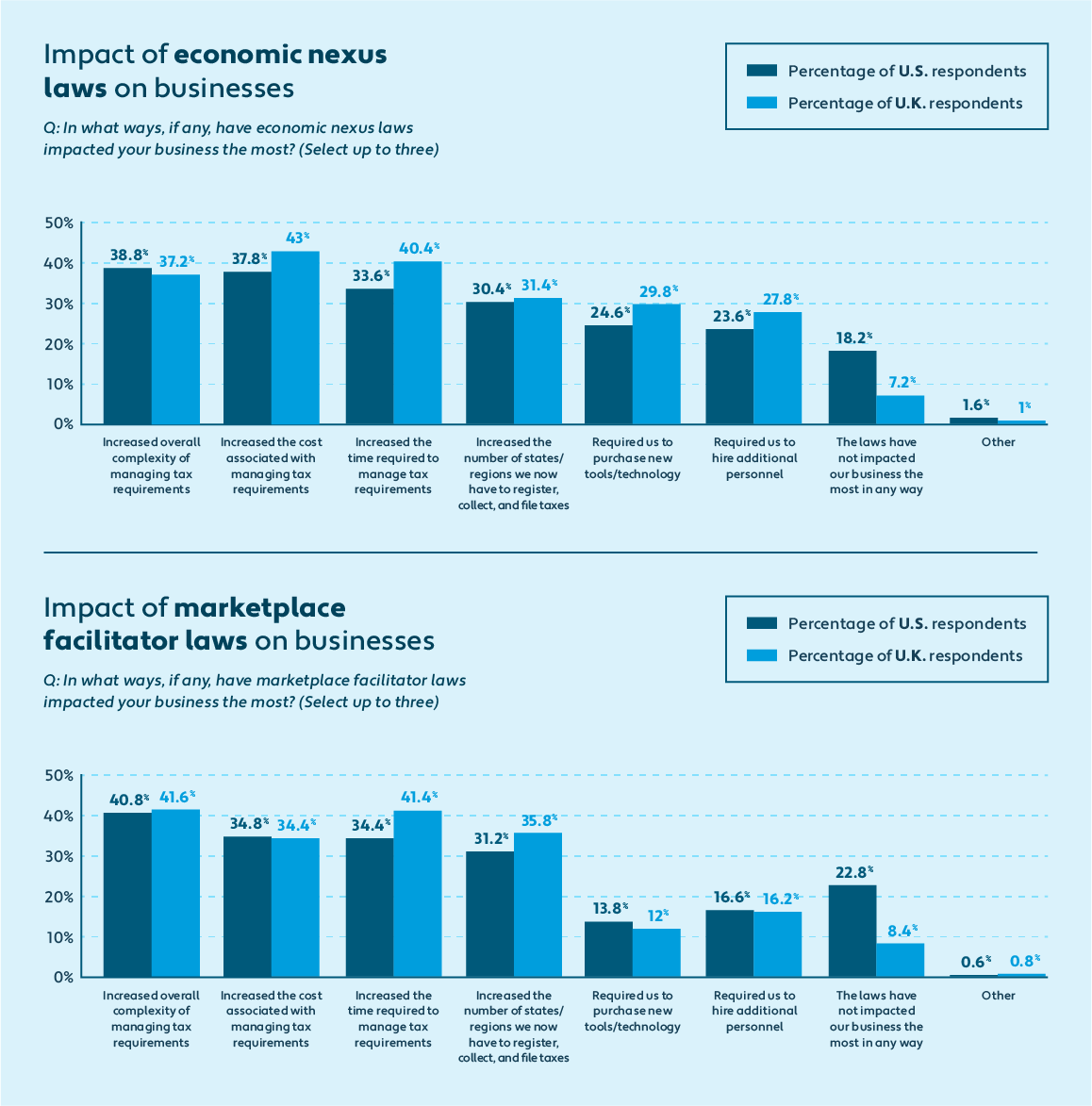
Because each state’s economic nexus laws are unique, it can be hard for businesses to stay on top of where they’ve triggered a sales tax obligation. Yet the stakes for overlooking nexus are high. If you’re found to have nexus with a state where you’re not registered for sales tax, you could be held liable for back taxes, penalties, and interest.