|
Date |
Country |
Scope/Notes |
|---|---|---|
|
2026 |
||
|
1 August |

Oman |
Selected large; All |

Lesotho |
All; B2B |
|
|
1 September |

|
Large, medium; B2B (issuing) |
|
|
Large, medium; E-reporting |
|
|
|
All; B2B (receiving) |
|

Brazil |
NFS-e standard takes effect |
|

Paraguay |
Taxpayer group 20; All |
|
|
1 October |

Bolivia |
Taxpayer groups 9–12; All |

Greece |
All; B2B |
|

Moldova |
All |
|

North Macedonia |
All |
|

|
Pilot period begins |
|
|
30 October |

|
Large; ASP appointing deadline |
|
15 November |

Dominican Republic |
Micro; All |
|
1 December |
Paraguay |
Taxpayer group 21; All |
|
31 December |

Philippines |
Large; All |
|
2027 |
||
|
1 January |

Portugal |
Medium, small, micro; B2G |

Croatia |
Non-VAT registered; B2B |
|

Czechia |
EET 2.0 reporting begins |
|

|
Large; B2B |
|

New Zealand |
Large; B2G |
|

Norway |
All; B2B (issuing) |
|

|
Micro; B2B, B2G |
|

Slovakia |
All; B2B, B2G |
|
|
|
Large; B2B, B2G |
|

Nigeria |
Medium enforcement starts; All |
|
|
1 February |
Oman |
All remaining large; All |
|
1 March |
Paraguay |
Taxpayer group 22; All |
|
1 June |
Paraguay |
Taxpayer group 23; All |
|
1 July |
|
All remaining; B2B, B2G |
|
1 August |
Oman |
All remaining; All |
|
1 September |
|
Small, micro; B2B |
|
|
Small, micro; E-reporting |
|
|
Paraguay |
Taxpayer group 24; All |
|
|
1 October |
|
Large; B2B |
|
31 December |

Malaysia |
Medium; All |
|
2028 |
||
|
1 January |
Nigeria |
Small and micro enforcement starts |
|
|
All remaining; B2B |
|

Latvia |
All; B2B |
|

Slovenia |
All; B2B |
|
|
1 April |

Singapore |
Micro; E-reporting |
|
1 October |
|
All remaining; B2B |
|
1 November |

Ireland |
Large; B2B (issuing) |
|
Ireland |
All; B2B (receiving) |
|
|
2029 |
||
|
1 April |
Singapore |
Small; E-reporting |

United Kingdom |
All; B2B, B2G |
|
|
1 November |
Ireland |
Medium; B2B (issuing) |
|
2030 |
||
|
1 January |
Norway |
All; B2B (receiving) |
|
1 April |
Singapore |
Medium; E-reporting |
|
1 July |

European Union (ViDA) |
All; B2B intra-EU cross-border |
|
Ireland |
Aligns with ViDA |
|
|
2031 |
||
|
1 April |
Singapore |
Large; E-reporting |
GLOBAL MANDATE DIRECTORY

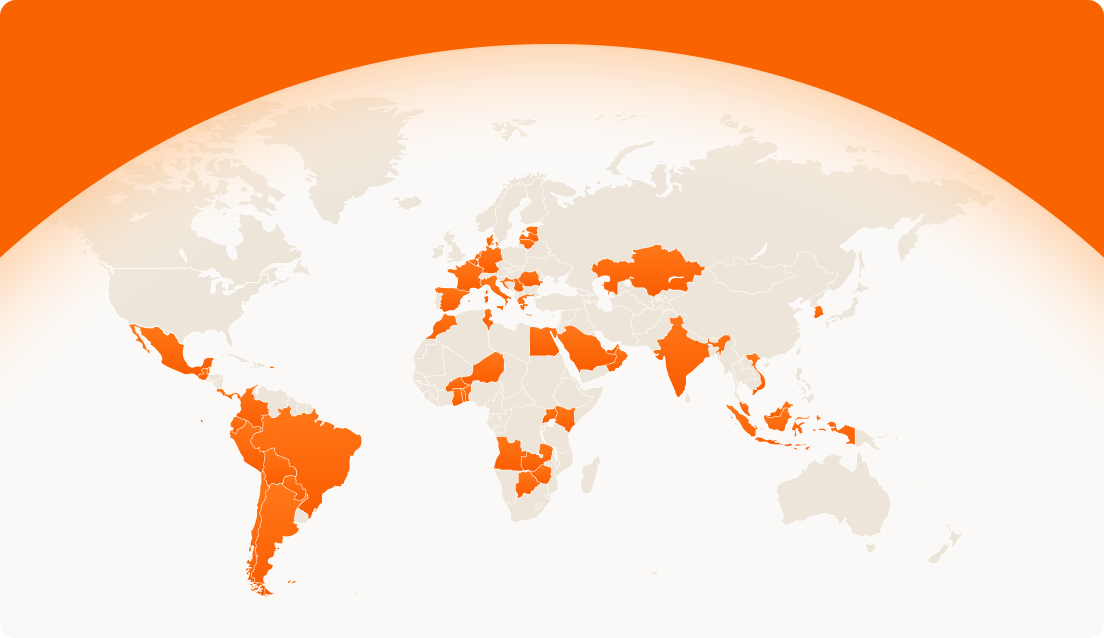
E-invoicing requirements can vary by country, transaction type, company size, industry, invoice format, reporting model, and technical standard. Some countries already require e-invoicing for B2G, B2B, or B2C transactions, while others are phasing in mandates over time.
CTCs are e-invoicing and reporting models that give tax authorities near real-time visibility into transaction data. Depending on the country, your business may need to validate, clear, or report invoice data before, during, or shortly after exchange.
A clearance model requires invoice data to be submitted to a tax authority or approved platform before, during, or shortly after the invoice exchange. In some countries, an invoice may not be legally valid until it has been cleared.
Peppol is used in many markets to support standardised electronic document exchange. However, using Peppol does not automatically satisfy every local e-invoicing, clearance, or reporting requirement.
Upcoming mandates include phased requirements in markets such as France, Germany, Spain, and the UAE. Deadlines and technical requirements can change, so businesses should monitor updates closely and plan for flexibility.
Start by identifying which mandates apply to your business. Then assess the impact on tax, finance, ERP, invoice data, supplier/customer workflows, and IT integrations. A scalable approach can help you meet the next deadline without rebuilding your process for each new country.